
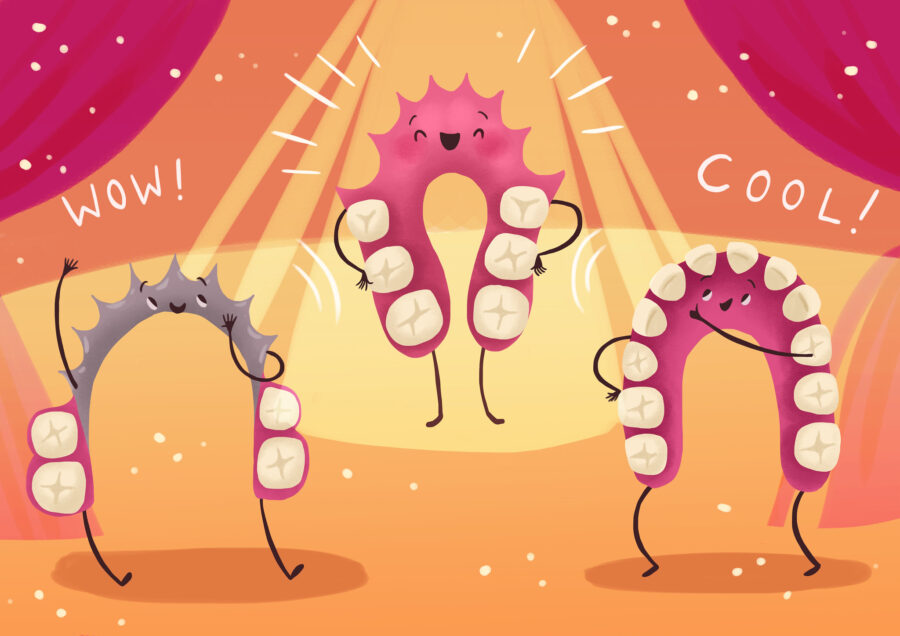
Full & Partial Dentures at McKinney Family Dental: Restoring Function With a Natural-Focused Plan
July 18, 2026 9:00 amMissing several teeth can change the way you eat, speak, and carry yourself in ways that are easy to underestimate. You may start choosing softer foods, chewing mostly on one side, or covering your mouth when you laugh. After a while, those small adjustments can become part of the day without you realizing how much effort they take.
Full and partial dentures replace missing teeth while also helping support the lips and cheeks. They can make meals easier and help speech feel clearer once the mouth has had time to adjust. The right design depends on how many teeth remain, where the spaces are, and how the upper and lower arches fit together.
At McKinney Family Dental in McKinney, TX, Dr. Sambhavna “Sam” Khanna offers both full and partial dentures for patients who need to replace several teeth or an entire arch. Each plan begins with a close look at the remaining teeth, gums, jawbone, and bite. From there, we can explain which type of denture fits your situation and what the process will involve.
Full and Partial Dentures Work in Different Ways
A full denture replaces every tooth in the upper jaw, lower jaw, or both. It rests directly on the gums and is shaped to work with the jawbone, lips, cheeks, tongue, and surrounding muscles. Because there are no natural teeth left for support, the fit depends heavily on the shape of the tissues underneath.
A partial denture is used when some healthy teeth remain. It fills the open spaces and uses selected natural teeth for support and stability. Depending on the design, it may use clasps, rests, precision attachments, or other components to help keep it in place.
The difference is not only how many teeth are replaced. Full dentures rely on the gums and jawbone, while partial dentures share support between the gums and remaining teeth. That changes how each one fits, feels, and moves during chewing.
How Fit Differs Between Full and Partial Dentures
A full denture has to spread pressure across a broad area of gum tissue. The upper denture usually gains more stability because it covers a larger surface and can create some suction against the palate. The lower denture has less area to work with and must share space with the tongue and moving floor of the mouth.
A partial denture usually feels more anchored because it connects to natural teeth. Those teeth help control side-to-side movement and keep the appliance from lifting as easily during speech or meals. Even so, the fit still depends on healthy gums and well-positioned support teeth.
Neither type should pinch, rock excessively, or create ongoing sore spots. Some adjustment is normal at first, especially as the mouth learns the new shape. However, repeated movement or pressure in one area usually means the denture needs to be adjusted.
Palate Coverage Is Different Too
An upper full denture usually covers most or all of the roof of the mouth. That coverage helps create suction and gives the denture a wider area for support. It can also affect how food feels and tastes at first because part of the palate is covered.
A lower full denture does not cover a palate because the lower jaw has none. Instead, it sits along the ridge of the jawbone and curves around the tongue. This is one reason lower dentures are often more difficult to stabilize.
Partial dentures may cover only a small part of the palate or may use a thin metal framework across it. The exact amount depends on which teeth are missing and how much support the appliance needs. Many patients find a thin metal connector less bulky than a thicker acrylic one.
Material Options Affect Thickness, Strength, and Appearance
Full dentures are commonly made with an acrylic base that matches the gums and acrylic or composite replacement teeth. Acrylic can be adjusted and repaired more easily than some other materials. It also allows the base to be shaped closely around the gums.
Partial dentures may be made with an acrylic base, a cast metal framework, flexible material, or a combination of materials. Acrylic partials are often thicker and may be used as a temporary or lower-cost option. Metal-framework partials are usually thinner and stronger, although small clasps may still be visible near certain teeth.
Flexible partials use a bendable, gum-colored material and may avoid visible metal in some cases. However, they are not the best choice for every bite or pattern of missing teeth. Dr. Khanna will compare the options based on support, durability, appearance, repair needs, and how the denture will be cleaned.
Keeping Useful Natural Teeth Can Help
When several teeth are damaged, it may seem simpler to remove everything and begin with a full denture. In some cases, that is the most practical option. In others, keeping a few strong teeth can improve support and make a partial denture feel more stable.
Dr. Khanna will examine each remaining tooth rather than treating the mouth as one all-or-nothing decision. A tooth with severe decay, a deep fracture, or advanced bone loss may not provide reliable support. Another tooth may still be useful for many years with the right treatment and home care.
Removing a tooth cannot be reversed, so we look carefully at what can reasonably be kept. At the same time, a weak tooth that is likely to fail soon may complicate the new partial. The final plan needs to account for both the condition of the teeth now and how dependable they are likely to be later.
A Natural-Looking Denture Starts With More Than Tooth Color
Tooth shade is one part of denture design, but it is not the only part people notice. The width, length, shape, and position of the teeth all affect how the smile looks. The amount and contour of the gum-colored base also influence the final appearance.
Some patients prefer a brighter smile, while others want teeth that resemble the color they had before. Small differences in shape and alignment can keep the denture from looking too uniform. Natural teeth have variation, so replacement teeth do not need to line up like identical tiles.
We also consider the face, lips, and amount of tooth that shows while speaking. A tooth shape that looks right on a model may appear too large once it is viewed with the full face. Looking at those details together helps the finished denture feel more personal.
The Denture Also Supports the Lips and Cheeks
Teeth help support the lower part of the face. When several are missing, the lips and cheeks may lose some of that support. A properly shaped denture can restore some fullness without making the mouth look bulky.
Too little support may leave the lips looking sunken, while too much can make the denture feel thick. The front teeth need to sit far enough forward to support the lips without interfering with speech or closure. We check that balance during the planning and try-in stages.
Patients often begin by looking at tooth color, but position can change the whole face more than shade alone. The way the denture supports the lips, corners of the mouth, and smile line is part of the design. That is why we look at the denture from several angles before it is finished.
Your Bite Shapes the Whole Plan
A denture has to do more than fill empty spaces. The upper and lower teeth need to meet in a way that allows chewing without rocking the appliance or creating sore spots. Even an attractive denture can be difficult to wear when the bite is uneven.
During planning, we record how the jaws relate to each other. We also look at facial proportions, lip position, and the amount of space available for the replacement teeth. Those records guide where the teeth are placed and how tall the bite should be.
If the bite is opened too much, the jaw may feel tired and the teeth may click during speech. If it is closed too far, chewing can feel less efficient and the lower face may look shortened. Careful measurements help us find a position that feels balanced.
Partial Dentures Need Healthy Support Teeth
A partial denture depends on the remaining teeth for support and stability. Before designing it, Dr. Khanna will check those teeth for decay, cracks, loose fillings, gum disease, and bone loss. Any concerns may need treatment before the partial is made.
Some teeth may need fillings or crowns so they can better support the appliance. In other cases, the shape of a tooth may be adjusted slightly to help the framework seat more securely. These details are planned with the denture rather than added later.
The gums around the support teeth also need regular care. Plaque can collect where the partial touches the tooth, especially around clasps and rests. A steady cleaning routine helps protect those teeth and keeps the partial more stable.
What a Partial Denture Feels Like
A new partial denture will feel noticeable at first. The tongue may keep finding the edges, speech may sound slightly different, and removing it can take some practice. That usually improves as the mouth becomes familiar with the appliance.
The partial should feel secure without pinching or placing painful pressure on one tooth. A few adjustment visits may be needed to smooth pressure points and improve the fit. Small changes can make a big difference once you begin eating and speaking with it outside the office.
A partial should be seated with your fingers rather than bitten into place. Biting down can bend a clasp or place too much force on a support tooth. We will show you how to insert and remove it without turning the process into a daily struggle.
Full Dentures Rely on the Gums and Jawbone
A full denture does not have natural teeth to hold onto, so its fit depends on the shape of the gums, jawbone, and surrounding muscles. The upper denture often feels more stable because it has more surface area and palate coverage. The lower denture has less room and must work around the tongue.
Because of that, lower dentures often take more practice. The tongue, lips, and cheek muscles gradually learn how to help keep the denture in place. At first, those same muscles may seem determined to test every edge.
A well-made denture should fit the available anatomy closely, but no removable lower denture feels exactly like natural teeth. We explain those limits early so the treatment stays realistic. When more stability is needed, implant support may be worth discussing.
What Happens During the Denture Process
The process begins with an exam of the mouth, gums, jawbone, and any remaining teeth. X-rays may be needed to check roots, bone support, or teeth that are being considered for removal. We also talk about your current denture, if you have one, and what you would like to improve.
Next, impressions or digital records are taken so the denture can be shaped to the mouth. Bite measurements, photographs, and tooth selections may also be included. These steps give the dental laboratory the information needed to build the proposed appliance.
Several visits may be needed before the final denture is ready. The exact sequence depends on whether teeth are being removed, whether a temporary denture is planned, and how much design work is involved. We will explain what each appointment is for before the process begins.
The Try-In Visit Helps Refine the Design
Before the final denture is completed, the teeth may be arranged in wax for a try-in. This allows us to check tooth position, bite, smile line, and support around the lips. It also gives you a chance to see the proposed appearance before the final acrylic is processed.
At the try-in, we may ask you to smile, speak, and repeat certain sounds. Words with “s,” “f,” and “v” can show whether the teeth are too long, too short, or sitting in the wrong position. It may feel repetitive, but speech tells us things a quiet smile cannot.
This is also the time to comment on shape and shade. A tooth may feel longer than expected, or the color may look brighter once it is seen with the face. Those changes are easier to make during the wax stage than after the denture is finished.
Immediate Dentures Can Replace Teeth During Healing
An immediate denture is made before the remaining teeth are removed. It is placed shortly after the extraction appointment so you do not have to go through the early healing period without teeth. This can be especially helpful when front teeth are involved.
Because the denture is made before the tissues heal, the fit changes as swelling decreases and the gums reshape. Adjustments and a temporary lining may be needed during the first several months. Eventually, the denture may need a permanent reline or replacement.
An immediate denture is part of the healing process rather than the final fit. It provides teeth while the mouth is changing underneath it. We will explain what follow-up care is likely so you know what to expect after the extractions.
Eating With New Dentures Takes Practice
The first meals with dentures are not the best time to test a steak or raw carrots. Softer foods cut into smaller pieces are easier while the mouth is learning the new bite. Chewing slowly on both sides can also help keep the denture balanced.
As comfort improves, you can gradually add firmer foods. Sticky foods and items with small seeds may be difficult at first because they can pull on the denture or work underneath it. With practice, most patients become more confident and return to a wider range of foods.
Chewing with dentures feels different because pressure is spread across the gums rather than carried through natural tooth roots. It may take longer to break food down, especially with a lower full denture. The process becomes easier as the muscles and bite adapt.
Speech Usually Improves With Use
New tooth positions and acrylic surfaces can briefly change speech. Certain sounds may feel awkward, and the tongue needs time to learn the new contours. Reading aloud at home can help the mouth adjust.
You may also notice a slight click if the dentures move or the teeth contact too quickly. Sometimes that improves as the muscles adapt, while other times the bite needs a small adjustment. Let us know if the clicking continues rather than trying to speak around it.
Saliva may increase during the first few days because the mouth recognizes the denture as something new. That usually settles as the appliance becomes familiar. The tongue is thorough, but it eventually stops checking the denture every few minutes.
Sore Spots Need Adjustment
A new denture can create tender areas as it settles against the gums. Mild pressure is common, but a spot that becomes increasingly painful should be checked. Continuing to wear the denture over an irritated area can create an ulcer.
Try to wear the denture for a short time before the adjustment visit unless the discomfort is severe. That allows Dr. Khanna to see exactly where the pressure is occurring. Removing it for a full day beforehand may let the area recover enough that the source is harder to identify.
Do not file or grind the denture at home. A small change in the wrong place can affect the bite or create a new pressure point. Adjustments are more precise when we can check the fit and bite together.
Adhesive Can Help, but It Should Not Carry the Fit
Denture adhesive can add a little extra stability for some patients. It may reduce movement during meals or speech, especially while the muscles are still adapting. A small amount is usually enough when the denture already fits reasonably well.
Adhesive should not be used to hold together a cracked denture or compensate for major looseness. If the denture needs large amounts every day, the gums and bone may have changed enough that a reline or replacement is needed. Adding more adhesive only creates a longer cleanup later.
We can show you how much to use and where to place it. Different products work better for different patients, and some people do not need adhesive at all. The denture fit should still provide most of the support.
Dentures Need Daily Cleaning
Dentures collect plaque, food, and stain just as natural teeth do. They should be brushed daily with a soft denture brush and a cleaner made for removable appliances. Regular toothpaste can be too abrasive and may scratch the surface.
Clean the gums, tongue, and roof of the mouth as well. If natural teeth remain, brush and floss them carefully before putting the partial back in. This helps reduce odor, irritation, decay, and gum problems around the support teeth.
Remove the dentures at night unless Dr. Khanna gives you different instructions. The tissues need a break from constant pressure, and sleeping without the denture allows the gums to rest. Store it safely in water or the recommended solution so it does not dry out or warp.
Dentures Change as the Mouth Changes
The gums and jawbone continue changing after teeth are lost. Over time, a denture that once fit closely may begin to move, trap food, or create sore spots. This does not necessarily mean the original denture was made incorrectly.
A reline can update the inside surface so it fits the current shape of the gums more closely. In other cases, the teeth and base may be too worn for a reline to solve the problem. At that point, a new denture may provide a better bite and more dependable fit.
Changes often happen gradually, so it can be hard to notice how loose the denture has become. Routine visits allow us to check the fit before the movement becomes frustrating. A denture that rocks during meals does not have to become the new normal.
Partial Dentures Need Regular Checks Too
A partial denture may loosen as the gums change or the support teeth shift. Clasps can also bend or wear over time. When that happens, the partial may move more during chewing or feel uneven when seated.
The natural teeth around the partial still need exams and X-rays. A cavity can develop beneath a clasp, and gum disease can weaken a tooth that once offered good support. Finding those concerns early may allow us to repair the tooth and preserve the denture.
Bring the partial to every dental visit, even when it seems to fit well. We can check the framework, acrylic, replacement teeth, and bite while also examining the mouth. Leaving it at home is a bit like bringing in one shoe and asking why the pair feels uneven.
Implants Can Add Stability
Dental implants can support certain full and partial dentures. Small attachments allow the denture to connect to implants in the jaw, which can reduce movement during chewing and speech. This is often especially helpful for a lower full denture.
An implant-supported denture is still designed around the face, bite, and available space. The number and position of implants depend on the bone, health history, and type of restoration. Some designs remain removable for cleaning, while others are fixed in place.
Implants are not required for every patient, and not everyone is a candidate. However, they may be worth discussing when a traditional denture feels too loose or chewing confidence is limited. Dr. Khanna can explain whether implant support fits the current plan or could be considered later.
Dentures Do Not End the Need for Dental Visits
Even when no natural teeth remain, the mouth still needs routine care. Dental visits allow us to check the gums, tongue, cheeks, jawbone, bite, and fit of the dentures. We also look for tissue changes that may not be painful or easy to see at home.
For partial denture wearers, regular care is especially important because the remaining teeth support the appliance. Keeping those teeth healthy helps the partial stay stable and may reduce the chance of needing a full denture later. Professional cleanings also reach areas that are difficult to manage around clasps and framework.
Bring the dentures with you so we can examine them along with the mouth. Small repairs, bite changes, and fit concerns are easier to handle before the appliance cracks or becomes painful. Routine care keeps the denture working as the mouth changes.
Full and Partial Dentures at McKinney Family Dental
Full and partial dentures can restore missing teeth while improving chewing, speech, facial support, and confidence. Full dentures replace an entire arch and rely on the gums, jawbone, and, in the upper jaw, palate coverage for support. Partial dentures work with the remaining teeth and may offer a thinner design through the use of metal or other framework materials.
At McKinney Family Dental in McKinney, TX, Dr. Sambhavna “Sam” Khanna can evaluate the remaining teeth, gums, jawbone, and current bite. We can discuss whether a full denture, acrylic partial, metal-framework partial, immediate denture, or implant-supported option fits your situation. You will also have time to preview the tooth shape and shade and understand what the adjustment period may involve.
Schedule a visit when missing teeth are making meals, speech, or smiling more difficult than they need to be. Bring your current denture if you have one, along with any questions about fit, palate coverage, materials, or implant support. We would be glad to help you choose an option that feels comfortable, looks natural, and works well in everyday life!
Contact UsImage from Authority Dental under CC 2.0
Categorised in: Dentures