
Safe Mercury Filling Removal: When Should You Consider Replacing Old Silver Fillings?
June 24, 2026 9:00 amOld silver fillings have a way of becoming background details. You may have had one since high school or college and barely notice it until a dentist brings it up during an exam. Then the questions start: Is it still okay? Does it need to be replaced? What happens if I want it removed because of the mercury?
Some people begin asking because the tooth has changed. Food may catch around the same filling more often than it used to. You may feel a quick jolt when biting into something firm, or floss may snag along one edge every night. Other people feel fine but would rather not keep amalgam fillings in place because they contain mercury.
Both situations are worth discussing. Still, an old silver filling does not automatically need to come out because it is old or because it is silver. A stable filling with healthy tooth structure around it may be best left alone and monitored. However, cracks, decay, worn edges, or a tooth that has become weak around the filling can change the picture.
At McKinney Family Dental in McKinney, TX, Dr. Sambhavna “Sam” Khanna can examine the filling, the tooth around it, and the way that tooth is handling normal chewing. When removal is recommended, the office follows SMART removal protocols to reduce mercury vapor and particle exposure during the procedure. This gives patients who have concerns about mercury a clearer picture of how the removal is handled.
What Are Silver Fillings?
Silver fillings are commonly called amalgam fillings. They have been used in dentistry for decades, especially in molars and premolars where chewing pressure is strongest.
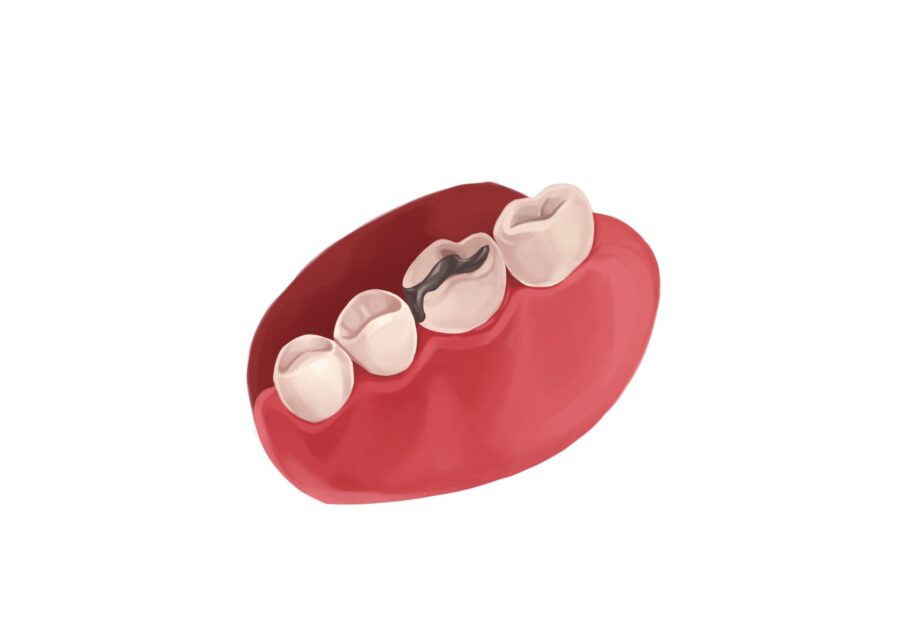
When an amalgam filling is first placed, it may only cover a small cavity. Over time, though, the tooth can change around it. Another cavity may form near the edge. The filling may wear down. A corner of the tooth may chip. Eventually, there may be more filling than natural tooth on the chewing surface.
Many amalgam fillings last for years without causing obvious trouble. However, a larger filling can leave less natural tooth structure behind, and the remaining tooth has to handle the pressure of chewing every day.
Picture a molar with a large filling in the middle. The filling may still look solid, but the walls of tooth around it can become thinner over time. Those thinner areas may eventually crack, sometimes while eating something fairly ordinary, such as a sandwich, nuts, or crusty bread.
Old Silver Fillings Do Not Always Need Replacement
It is easy to assume that a filling has an expiration date. In reality, its age is only one part of the decision.
If the filling is stable, the edges are sealed, there is no decay nearby, and the tooth does not show signs of cracking, it may be reasonable to leave it in place and watch it during regular visits. Replacing a filling means working on the tooth again, so there should be a clear reason to remove it.
At the same time, older fillings deserve a close look because problems can develop where you cannot see them. A filling may look fairly normal from the chewing surface while a small gap has formed underneath. There may be a crack beside it that only shows up on an X-ray, in a photo, or during an exam.
So, it helps to look beyond how long the filling has been there. Is it still sealed? Are the tooth walls still strong? Is there new decay around the edge? Has the tooth started reacting differently when you chew? Those details are more useful than the filling’s age alone.
Cracks Can Make a Filling More Than a Filling Problem
A large silver filling can sometimes become part of a larger crack issue. Natural tooth structure and amalgam do not always flex in the same way under pressure, especially in a molar that has handled years of chewing.
At first, the signs can be subtle. You may feel a quick twinge when you bite down, followed by pain when you release your bite. Cold drinks may bother that tooth for a few seconds. In other cases, you may gradually start chewing on the other side because that area no longer feels quite right.
Cracks can be difficult to spot. Some stay near the surface and can be treated before much damage occurs. Others run deeper into the tooth and may become harder to manage when they are left alone.
Depending on the crack, the tooth may only need a new filling. However, if the crack involves a larger section of tooth, Dr. Khanna may recommend an onlay or crown. These restorations cover more of the tooth, which can help protect weakened areas from taking the same chewing force day after day.
Decay Can Form Around the Edges
A filling can still look solid from the top while decay begins around or underneath it. This is called recurrent decay, and it can happen when bacteria reach a small gap between the filling and the tooth.
Sometimes patients notice a change first. Food may get stuck in one place after meals. The tooth may become more sensitive to cold. Floss may start catching near the edge. However, decay can also stay quiet for a while, especially between teeth or underneath an older filling.
That is one reason regular exams and X-rays are useful. They can show changes that are difficult to see on your own, often before the tooth becomes painful or a larger piece breaks away.
When decay is caught early, replacing the filling may be all that is needed. If it has spread farther into the tooth, though, there may not be enough healthy structure left for another filling alone. At that point, an onlay or crown may provide better coverage.
A Filling That Feels Different Is Worth Mentioning
Most people can tell when a tooth feels different, even if they cannot explain exactly why. A filling may suddenly feel rough against your tongue. Floss may snag in one spot every night. Or you may notice a sharp edge after eating and wonder whether a small piece chipped.
Sometimes the edge of a filling has simply worn down. Other times, a small piece of tooth or filling has broken away and created a place where food keeps getting trapped.
It is worth having those changes checked rather than waiting for pain. A loose or broken edge can create an opening where food and bacteria collect, and the opening can get larger with time.
The earlier the tooth is checked, the more likely the repair stays simpler. Waiting until a filling falls out, a tooth fractures, or pain becomes constant can make the next step more involved.
Why Patients Consider Replacing Old Silver Fillings
People have different reasons for considering replacement. For some, the tooth itself is the issue. There may be a crack, new decay, a worn edge, or a filling that no longer gives the tooth enough support.
For others, it is mostly about appearance. Silver fillings can darken over time and may show when you laugh or smile, depending on where they are located. Tooth-colored fillings and ceramic restorations blend in more naturally with the surrounding tooth.
Then there are patients who have concerns about mercury. They may have several amalgam fillings, may be trying to make more health-conscious choices, or may simply prefer to replace older materials when the timing is right.
That concern is worth discussing, but it does not automatically mean every filling should be removed right away. Dr. Khanna can look at the condition of each tooth and help you sort out whether it makes sense to monitor a filling, replace it now, or plan for replacement later if the tooth begins showing signs of wear.
What Does SMART Mercury Filling Removal Involve?
When an old amalgam filling needs to be removed, McKinney Family Dental follows SMART removal protocols from the International Academy of Oral Medicine and Toxicology, also known as IAOMT.
SMART stands for Safe Mercury Amalgam Removal Technique. The process is designed to reduce exposure to mercury vapor and particles during removal. Instead of approaching the appointment like a basic filling replacement, the dental team uses added protective steps to isolate the tooth and capture material close to the treatment area.
A rubber dam is used to separate the tooth from the rest of the mouth. High-volume suction is placed near the filling as it is removed to capture particles and vapor. The office also uses air filtration as part of the process, which supports a cleaner treatment environment.
The filling may be removed in sections rather than being ground through all at once. This gives the dentist more control during the procedure while reducing the amount of material released as the filling comes out.
After the filling is removed, Dr. Khanna can clean the tooth and see what is underneath. Hidden decay, cracks, and thin tooth walls are often easier to evaluate at that point. In some cases, the final recommendation depends on what is found after the filling is removed.
What Can Replace an Old Silver Filling?
The replacement depends on how much healthy tooth remains and how much pressure that tooth takes when you chew.
A tooth-colored composite filling may be a good fit when the old filling is small to medium in size and the tooth is still strong around it. Composite bonds directly to the tooth and can be matched closely to the surrounding shade.
For a larger filling, an onlay may make more sense. An onlay covers more of the chewing surface and can protect areas that are more likely to crack, while preserving more natural tooth structure than a full crown.
When the filling is very large, the tooth walls are thin, or cracks have spread farther through the tooth, a crown may be recommended. A crown covers the tooth more fully, which can be useful when another filling would leave too much of the tooth unsupported.
The point is not to place the biggest restoration possible. It is to choose something that matches what the tooth can realistically handle.
When to Schedule an Exam Soon
It is worth scheduling an exam if you have pain when chewing, new sensitivity to hot or cold, a sharp edge, food getting caught around one filling, or a piece of tooth or filling that has broken.
You may also want to come in if an old silver filling has not been checked in years, especially if it is large or that tooth has started feeling different from the others.
Not every issue starts with a toothache. You may just find yourself avoiding one side of your mouth, cutting food smaller, or noticing that floss catches in the same place every night. Those small changes can point to something that is easier to address now than after the tooth breaks.
Safe Mercury Filling Removal in McKinney, TX
Old silver fillings can stay in place for many years, and some do not need replacement at all. However, cracks, recurrent decay, worn edges, and changes in the tooth around a filling are all reasons to take a closer look. Mercury and material concerns can also be part of the conversation, especially when replacement is already being considered.
At McKinney Family Dental in McKinney, TX, Dr. Sambhavna “Sam” Khanna can evaluate old amalgam fillings and talk through what the tooth needs now. When removal is recommended, the office follows SMART mercury removal protocols that include isolation, high-volume suction, air filtration, and other added precautions during treatment. Call to schedule an exam if a filling feels rough, has cracked, is causing sensitivity, or if you would like to discuss replacing older silver fillings.
Contact UsImage from Authority Dental under CC 2.0
Categorised in: Mercury Filling Removal